Montreal's seismic hazard is a reality: the Western Quebec Seismic Zone has triggered M5+ events, and in 1732, an earthquake near the Island of Montreal shook stone structures across hundreds of kilometers. A conventional standard penetration test falls short in clay from the Champlain Sea. The hollow thud of the split-spoon sampler as it enters the clay provides blow counts that reveal pore pressure and grain arrangement. We apply simplified methods to calculate cyclic stress ratios versus cyclic resistance ratios at each critical depth, and when silt-rich layers approach instability, we extract undisturbed Shelby tubes for cyclic triaxial laboratory testing. The objective is not to simply label a site as safe but to assess the accumulation of excess pore pressure and its implications for bearing capacity and settlement.
Liquefaction is not a yes-or-no question; it is a calculation of how much pore pressure builds up and how much settlement that leaves behind.
Service characteristics in Montreal
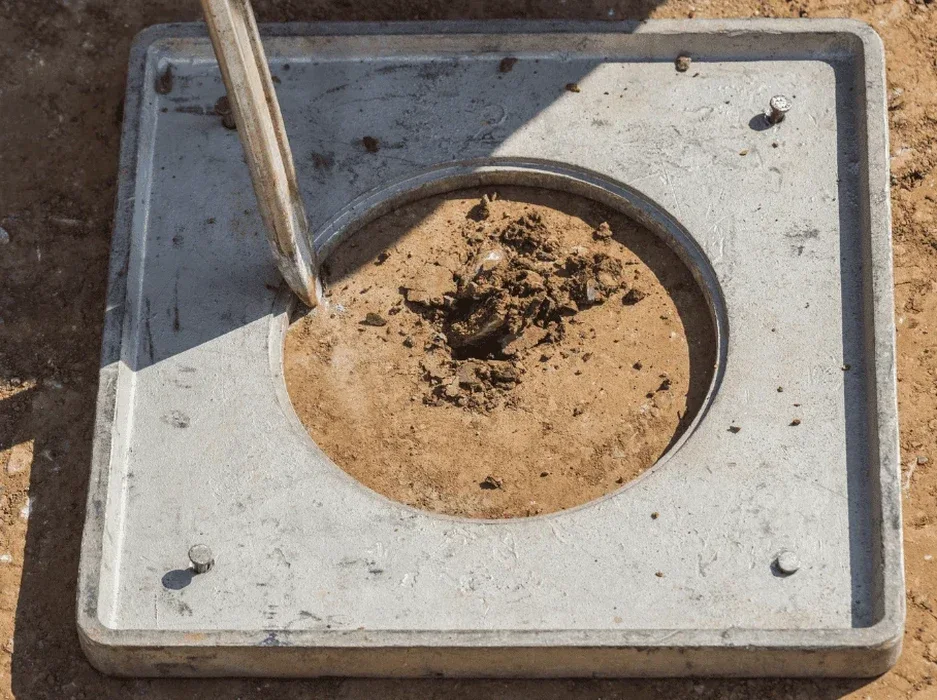
Critical ground factors in Montreal
Montreal lies on the fringe of the Canadian Shield, underlain by soft post-glacial deposits that magnify ground motion. The 1988 Saguenay earthquake (M5.9, located 350 km north of the city) served as a stark reminder that this region is not seismically inert. Sensitive Champlain Sea clays and interspersed silty sand lenses are the primary concerns. Liquefaction is usually localized rather than widespread, which makes prediction via regional maps difficult. Site-specific analysis is the sole dependable approach. A thin liquefiable lens under a footing can cause 15 mm of differential settlement, resulting in cracked slabs and damaged utilities. In our practice, the biggest cost arises not from the analysis but from uncovering the issue after the structural design is finalized.
Our services
In Montreal, liquefaction assessments are usually one component of a comprehensive geotechnical investigation. The following services represent the standard elements we integrate to achieve a reliable safety factor and an effective mitigation plan.
Cyclic Stress Ratio Profiling
At each sample depth, we compute CSR using site-specific ground motion data with corrections for overburden and earthquake magnitude. This analysis highlights the layers that exceed the liquefaction threshold and quantifies the exceedance.
Post-Liquefaction Settlement Analysis
Volumetric strain is evaluated following the approaches of Tokimatsu & Seed and Ishihara & Yoshimine, relating factor of safety and relative density to surface settlement estimates.
Lateral Spreading Hazard Assessment
Adjacent to the Saint Lawrence River or its paleochannels, lateral displacement potential is assessed with empirical models tailored to the site's slope configuration.
Improvement Verification
Following ground improvement techniques such as vibrocompaction, stone columns, or deep soil mixing, we compare pre- and post-treatment CPT or shear wave velocity profiles to verify the desired factor of safety.
Top questions
Is liquefaction really a concern in Montreal, given the low historical seismicity?
Indeed, although Montreal's seismic hazard is less severe than the West Coast's, the Western Quebec Seismic Zone remains active and can generate M6.5 or larger earthquakes. The Champlain Sea clays amplify shaking, and sand lenses within them are prone to liquefaction given appropriate conditions. Under NBCC 2020, Montreal lies in a moderate seismic hazard area, necessitating site-specific analysis for critical and post-disaster structures.
What is the typical cost range for a liquefaction analysis in the Montreal area?
A comprehensive liquefaction study—encompassing field work (boreholes with SPT or CPT), laboratory analysis, and a detailed report—generally costs between CA$3.130 and CA$6.010, with the final amount depending on the number of test points and stratigraphic complexity. Projects that demand cyclic triaxial testing on undisturbed samples fall at the higher end of this range.
How deep do you investigate for liquefaction potential?
Investigations adhere to NBCC and NCEER standards, which mandate exploring to depths where overburden stress or soil density preclude liquefaction. For Montreal, this depth is usually 20–25 m below surface, though we modify it according to CPT refusal depth and the occurrence of dense till or bedrock. The essential aim is to identify any loose sand or silt layers within the zone of influence.
Can you use existing borehole logs, or do we need new fieldwork?
Existing logs can provide a preliminary screening, but for a defensible factor of safety, we almost always recommend new fieldwork. SPT data from old reports often lack the required hammer energy calibration, and CPT soundings—which give a continuous profile—are far superior for detecting thin liquefiable seams that a split-spoon sampler might miss every 1.5 meters. More info.