Geotechnical laboratory testing forms the analytical backbone of every safe and durable construction project in Montreal. This category encompasses the physical and mechanical evaluation of soils, rock, and aggregate materials extracted from project sites. From the glacial tills of the Saint Lawrence Lowlands to the sensitive clay deposits near the river, understanding subsurface behavior through controlled testing is not optional—it is a foundational requirement. Services such as Atterberg limits and grain size analysis allow engineers to classify fine-grained soils and predict their volume change potential, shear strength, and drainage characteristics under load. In a city where winter frost penetrates up to 1.4 meters and spring thaw saturates the ground, laboratory data directly informs foundation design, slope stability assessments, and earthwork specifications.
Montreal’s geology presents a unique set of challenges that elevate the importance of precise laboratory testing. Much of the island and its surroundings are underlain by Champlain Sea clays—notoriously sensitive silty clays that can lose significant strength when disturbed or exposed to water. These deposits are interbedded with glacial till of variable density and occasional rock formations of the Trenton and Utica groups. Without laboratory quantification of parameters like the liquidity index, which ties directly to Atterberg limits, or the particle size distribution curve obtained through grain size analysis, geotechnical engineers cannot reliably assess the risk of retrogressive landslides or excessive settlement. The presence of urban fill, often containing construction debris and historical industrial waste, adds another layer of complexity that only controlled laboratory characterization can resolve.
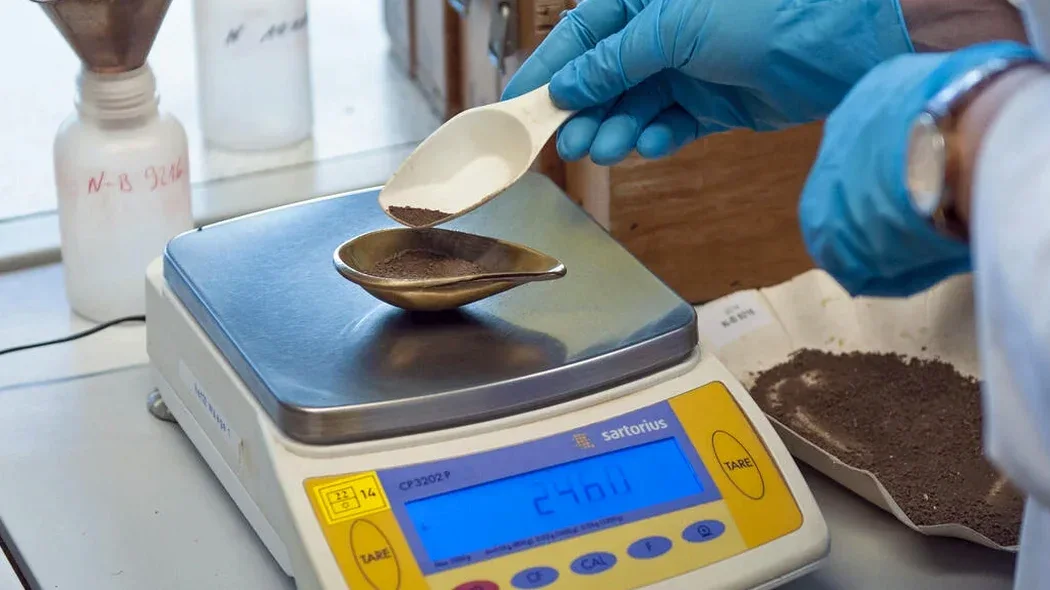
In Quebec, geotechnical laboratories must comply with regulations set by the Bureau de normalisation du Québec (BNQ) and the Canadian Foundation Engineering Manual (CFEM), which are largely consistent with ASTM International and CSA Group specifications. For example, concrete aggregate testing follows CSA A23.1 and A23.2, whereas Atterberg limits and particle size analysis are conducted per ASTM D4318 and D422, respectively. The Quebec Ministry of Transportation (MTQ) additionally defines its own testing protocols for infrastructure projects. Laboratories operating in Montreal need accreditation from either the Canadian Council of Independent Laboratories (CCIL) or the Association des laboratoires d’essais accrédités du Canada (ALAC) to ensure that their test results are legally defensible and satisfy the stringent requirements of provincial engineers and municipal building officials.
Comprehensive laboratory testing is essential for a wide variety of projects across Montreal. For instance, consolidation tests are needed for high-rise residential towers in Griffintown to estimate settlement in compressible clay layers. The Réseau express métropolitain (REM) megaproject relies on triaxial shear and permeability tests to guide deep excavation and tunnel lining design. Roadway rehabilitation on Autoroute 40 uses California Bearing Ratio (CBR) and Proctor compaction tests to enhance subgrade and granular base performance through severe freeze-thaw cycles. Even smaller residential developments in areas like Pierrefonds or Saint-Laurent require soil characterization to comply with the Règlement sur le contrôle des décharges en milieu agricole or to design effective stormwater infiltration systems. In all cases, laboratory testing transforms raw field samples into engineering parameters that support safe, economical, and code-compliant designs.
Questions and answers
What is the purpose of a geotechnical laboratory testing program in Montreal?
Controlled experiments aim to determine the physical and mechanical properties of subsurface materials. This is especially important in Montreal because of the sensitive Champlain Sea clays and glacial tills. Engineers use laboratory data—such as shear strength, compressibility, and grain size distribution—to design safe foundations, predict settlement, and ensure compliance with the National Building Code and Quebec-specific standards like those of the MTQ.
Which standards govern geotechnical laboratory testing in Quebec?
Testing in Quebec is conducted in accordance with ASTM International and CSA Group standards, including ASTM D4318 for Atterberg limits and ASTM D422 for particle size analysis. The Canadian Foundation Engineering Manual offers overarching direction, while the Bureau de normalisation du Québec (BNQ) and the Ministry of Transportation of Quebec (MTQ) issue additional protocols. Laboratories generally hold CCIL or ALAC accreditation to verify that their results meet provincial regulatory and legal requirements.
How do local soil conditions in Montreal affect laboratory testing requirements?
The geology of Montreal is characterized by sensitive Champlain Sea clays, which can lose strength when disturbed. This condition requires specialized testing like Atterberg limits to evaluate plasticity and liquidity index, and grain size analysis to determine the silt and clay fraction. Urban fill and variable glacial till necessitate a comprehensive test suite to distinguish natural deposits from anthropogenic materials and to accurately predict behavior under load and changing moisture conditions.
When is a laboratory testing program required for a construction project?
Almost all construction projects in Montreal that require a building permit—from single-family homes to major infrastructure—necessitate a laboratory testing program. It is a mandatory part of the geotechnical investigation phase to characterize subsurface conditions. Specific triggers include foundation design on compressible soils, slope stability analysis, roadway and pavement design, and environmental site assessments where contaminant transport through soil must be modeled. The geotechnical engineer of record defines the scope based on project scale and site complexity.