The field of seismic engineering in Montreal holds a unique role within Canada's geotechnical landscape. Although Quebec lies outside the Pacific Ring of Fire, the city is located in the Western Quebec Seismic Zone, which experiences moderate yet ongoing intraplate seismic activity. This discipline covers all aspects of analysis, design, and protective measures needed to shield buildings and infrastructure from earthquake-related ground vibrations. For both engineers and developers, grasping the local seismic risk goes beyond simply meeting building codes; it is an essential duty to ensure public safety and protect assets in a city characterized by its high population density, old infrastructure, and difficult geology resulting from post-glacial processes.
The geological conditions beneath Montreal amplify the importance of specialized seismic services. Much of the central and eastern portions of the island are underlain by the Champlain Sea clays, sensitive marine deposits that can generate significant site amplification effects during a seismic event. These soft soils can dramatically alter the characteristics of bedrock motion, increasing the duration and intensity of shaking at the surface. Furthermore, the presence of a shallow water table in many areas creates conditions ripe for soil liquefaction, a phenomenon where saturated granular soils lose their strength and behave as a viscous fluid. A thorough soil liquefaction analysis is therefore a critical first step in any major project, directly informing foundation design and ground improvement requirements.
The regulatory framework governing seismic design in Montreal is primarily derived from the National Building Code of Canada (NBC), adopted and amended by the province of Quebec through the Quebec Construction Code. The NBC mandates site-specific seismic hazard assessments based on a uniform hazard spectrum for a 2% probability of exceedance in 50 years. Crucially, the code classifies sites based on their subsurface conditions, from hard rock (Site Class A) to soft, liquefiable soils (Site Class E or F). This classification process relies heavily on detailed geotechnical investigations, including shear wave velocity measurements. A comprehensive seismic microzonation study takes this a step further, mapping the spatial variability of ground motion amplification and secondary hazards like liquefaction and landslide susceptibility across a project site or even an entire borough, providing a high-resolution tool for risk management and urban planning.
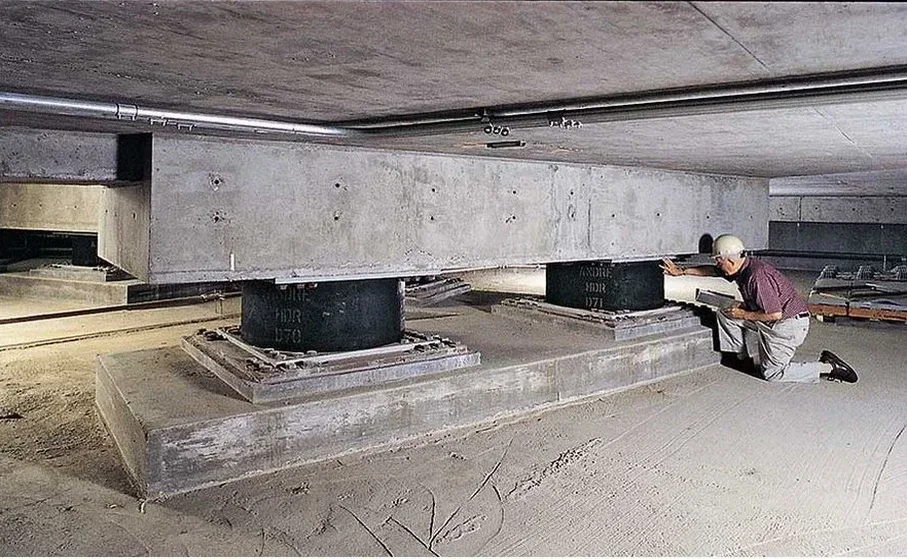
The demand for these advanced seismic services in Montreal spans a wide range of project types. High-rise residential and commercial towers, especially those with complex structural systems, require rigorous dynamic analysis. Critical infrastructure such as hospitals, emergency response centers, and bridges—designated as post-disaster buildings—must meet enhanced performance objectives that often go beyond standard code minimums. The restoration and retrofitting of heritage buildings, a constant feature of Montreal’s construction landscape, also necessitates a delicate balance between structural intervention and seismic resilience. For new landmark structures or those on particularly poor ground, base isolation seismic design is increasingly considered as a means to decouple the superstructure from the shaking ground, dramatically reducing seismic demands and protecting both the building and its contents.
Questions and answers
Is Montreal really at risk for a significant earthquake?
Indeed, Montreal lies within the Western Quebec Seismic Zone, a tectonically active intraplate area. Although major earthquakes occur less often than in regions such as British Columbia, the city's risk is elevated because of its crowded population, many aged masonry structures without reinforcement, and soft soils that increase ground motion. An earthquake of magnitude 5.0 or greater is a plausible event that could inflict significant harm.
What is the difference between seismic microzonation and a standard site classification?
According to the National Building Code, a typical site classification designates one site class for a particular location using the average shear wave velocity over the uppermost 30 meters. In contrast, seismic microzonation is a more comprehensive mapping effort that forecasts how ground shaking, liquefaction potential, and landslide hazards vary spatially throughout a region, incorporating basin effects and localized geological conditions.
When is a soil liquefaction analysis mandatory for a project in Montreal?
This becomes compulsory when a subsurface study uncovers saturated, loose to moderately dense granular materials like sands and silty sands beneath the groundwater level. The National Building Code mandates an assessment for Site Class F if liquefaction is detected. Since such deposits are common in old river channels and deltaic zones throughout the island, performing this evaluation is frequently necessary.
How does the Quebec Construction Code address seismic design differently from the national standard?
The province of Quebec uses the National Building Code of Canada as its foundational standard while issuing its own provincial modifications. Seismic design practices in Quebec typically follow the hazard parameters and site classification methods outlined in the NBC. Nonetheless, particular administrative rules, including compulsory independent reviews of structural and seismic plans for select high-priority buildings in Montreal, could be enforced.