With winter temperatures frequently dropping below -20°C and summer highs exceeding 30°C, Montreal faces one of North America's harshest climates, making specialized roadway engineering essential for municipal and provincial projects. The discipline covers the entire lifespan of road infrastructure—from initial geotechnical studies to final surface layer selection—ensuring that freeways, residential streets, and principal roads stay functional and safe through extreme freeze-thaw cycles. Comprehensive planning, design, construction, and maintenance of pavements and subgrade systems are all part of roadway engineering in this city, where the technical demands on pavement structures are exceptionally high.
Montreal's geology presents a complex tapestry of conditions that directly influence roadway performance. Much of the island rests on the St. Lawrence Lowlands sedimentary basin, characterized by deep deposits of marine clay, particularly the sensitive Champlain Sea clays that can lose significant strength when disturbed. Glacial till, silty sands, and occasional bedrock outcrops of limestone and shale further complicate the subsurface profile. These variable soil conditions demand rigorous geotechnical evaluation before any roadway design can proceed, as differential settlement, frost heave, and poor drainage can rapidly degrade even well-constructed pavements if the subgrade is not properly characterized and treated. A thorough CBR study for road design becomes the cornerstone of this evaluation, providing the empirical data needed to assess subgrade strength and predict long-term pavement behavior under traffic loading.
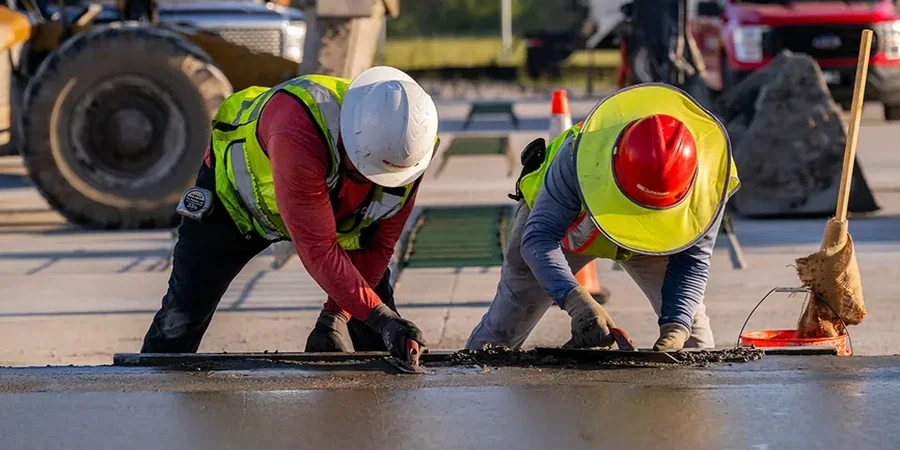
A multi-layered set of provincial and municipal rules governs regulatory compliance in Montreal. The Ministère des Transports du Québec (MTQ) issues the Normes – Ouvrages routiers, which provide the foundational specifications for roadway design and construction across Quebec, including mandatory requirements for materials, compaction, and structural design approaches. Within Montreal, the Service de l'urbanisme et de la mobilité adds municipal bylaws and standard drawings that tackle local issues like urban drainage integration, utility coordination, and winter upkeep. While the AASHTO 1993 method, enhanced by the mechanistic-empirical pavement design guide (MEPDG), is frequently used for structural design, MTQ supplies its own calibrated parameters to reflect Quebec's unique climate and loading conditions.
Roadway projects in Montreal span a diverse range of applications, each requiring tailored engineering approaches. Major highway rehabilitation along Autoroute 40 or the Turcot Interchange demands high-performance flexible pavement design capable of enduring heavy truck traffic and aggressive de-icing chemicals. Urban boulevard reconstructions like those on Rue Sainte-Catherine prioritize smoothness, noise reduction, and pedestrian interface while maintaining structural integrity. Industrial zones and port access roads often call for rigid pavement design where resistance to fuel spills, static loads, and abrasion is paramount. From suburban residential streets to bus rapid transit corridors, every project type relies on a foundation of sound geotechnical investigation and climate-adaptive engineering to achieve its intended design life.
Questions and answers
What distinguishes roadway engineering in Montreal from other Canadian cities?
Montreal presents exceptionally challenging conditions due to its combination of Champlain Sea sensitive clays, extreme freeze-thaw cycles with more than 50°C annual temperature variation, and dense urban infrastructure. The presence of marine clay subgrades calls for specialized stabilization methods, and the city's bilingual regulatory environment requires projects to adhere to both provincial MTQ standards and municipal bylaws that often surpass national guidelines for winter resilience.
How do Montreal's soil conditions affect roadway design decisions?
Marine clay deposits prevalent across the island are very sensitive to moisture fluctuations and disturbance, which can cause differential settlement and frost heave. This demands comprehensive geotechnical investigations, including CBR testing to assess subgrade strength, and often requires subgrade replacement, chemical stabilization, or geosynthetic reinforcement before pavement construction can be carried out reliably.
What are the typical pavement types used for Montreal road construction?
Depending on the use, Montreal utilizes both flexible and rigid pavement systems. Flexible asphalt pavements are predominant on most arterial roads and residential streets because they can adapt to subgrade movements, whereas rigid concrete pavements are chosen for high-traffic industrial zones, bus terminals, and intersections where resistance to deformation and de-icing chemicals is vital.
What seasonal factors must roadway engineers account for in Montreal?
Engineers have to account for extreme frost penetration that can reach beyond 1.5 meters, spring thaw weakening that drastically lowers subgrade bearing capacity, and summer heat that can cause asphalt binders to soften. Adequate drainage design, frost-protective granular layers, and climate-appropriate material specifications are crucial to avoid early cracking, rutting, and pothole formation throughout the annual cycle.