Montreal’s subsoil isn’t just dirt. It’s a layered record of glacial retreat and marine invasion. The Champlain Sea deposited sensitive clays across the island, then the glaciers left compact till underneath. Standard boreholes can miss thin silt seams between those layers. That’s why we run the cone penetration test — CPT — to get a continuous resistance profile without sample disturbance. We see contractors lose weeks when a design assumes uniform clay and hits a sand lens at 14 meters. A single CPT sounding can map those transitions in an afternoon, even in the tight access alleys of Rosemont or the industrial lots of Montréal-Est. For sites near the St. Lawrence, where the water table sits barely two meters down, we combine CPT data with in-situ permeability measurements to separate drainage behavior from strength.
In Montreal’s sensitive clays, a CPT dissipation curve tells you more about foundation performance than any lab consolidation test.
Service characteristics in Montreal
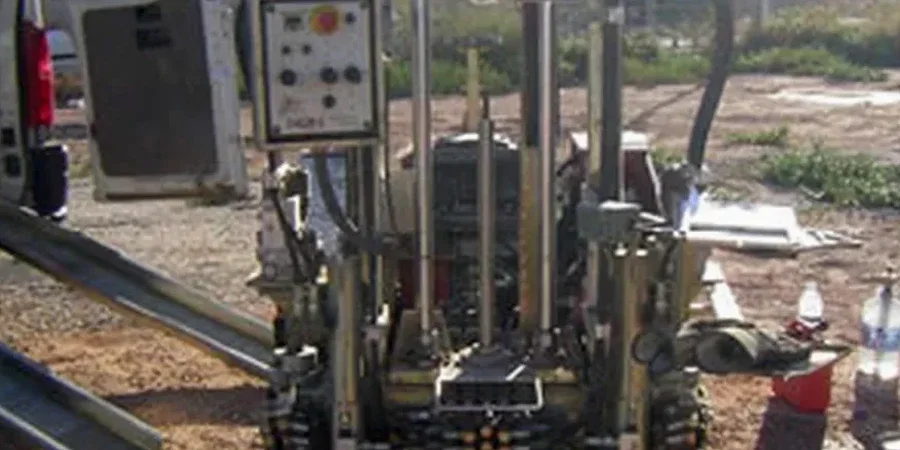
Procedure video
Critical ground factors in Montreal
Montreal is located in a zone of moderate seismicity; the most notable historical earthquake, a magnitude 5.8 event in 1732, had its epicenter close to the island. The presence of sensitive clay introduces not only the potential for settlement but also cyclic softening. When performing CPT in Champlain Sea deposits, normalized tip resistance and friction ratio can be obtained to conduct a liquefaction trigger analysis. The Robertson (2009) method is preferred over the standard Youd-Idriss approach because it performs better with silty clays. For deep excavations in downtown areas, such as cut-and-cover stations that pass through multiple till layers, overlooking a thin liquefiable silt layer can cause base instability during dewatering. The cone can detect such a seam, whereas an SPT split spoon would likely miss it. In a city that constructs 20,000 new housing units annually, many on reclaimed or former industrial land, this level of detail is essential.
Our services
Our CPT offerings address the full spectrum of geotechnical needs in Montreal, from rapid site class determinations to comprehensive liquefaction evaluations.
Standard Piezocone Sounding
Provides continuous qc, fs, and u2 profiling up to 30 meters. Dissipation tests at the bearing layer and soil behavior type classification per Robertson charts are included. Suitable for foundation design in Ville-Marie and Plateau areas.
Seismic CPT (SCPTU)
Piezocone equipped with a downhole geophone for direct shear wave velocity measurement. Utilized when NBCC site class E or F is suspected, or when the structural team requires shear wave velocity for dynamic analysis of mid-rise buildings on the eastern clays of Montreal.
Top questions
How much does a CPT sounding cost in Montreal?
A standard piezocone sounding to 20 meters with one dissipation test typically costs between CA$260 and CA$340 per meter. Mobilization for the truck rig is an additional line item that varies based on distance from our base and site access conditions; tight residential streets or island sites may necessitate smaller track-mounted equipment.
How deep can the CPT rig push through Montreal's glacial till?
The depth of refusal depends on till density. In the central plateau, refusal is often encountered between 18 and 25 meters when the cone tip exceeds 30 MPa. In the West Island, where till is looser, soundings can go to 35 meters. If refusal is shallow, we pre-drill through the crust and continue with a seismic cone, or switch to a mud-rotary borehole with SPT sampling for deeper layers.
Do you need traffic control permits for CPT work on Montreal streets?
Yes. Any work on Montreal's public right-of-way requires a permit from the arrondissement, and for arterial roads, a City-approved traffic control plan is needed. We manage the permit application as part of the mobilization scope. For sidewalk or lane closures in dense neighborhoods like Le Plateau, we coordinate with Stationnement Montréal to reserve the space. Lead time is typically five to seven business days.
Can CPT data be used for seismic site classification under NBCC?
Absolutely. The NBCC 2020 permits site class determination using CPT data through correlations between tip resistance and shear wave velocity. Our piezocone soundings provide the friction ratio and pore pressure measurements necessary for identifying soil behavior type, which directly contributes to the Vs30 estimate. For sites near the boundary between class C and D—common in Montreal's transition from till to clay—we recommend a seismic CPT to obtain direct Vs measurements and eliminate correlation uncertainty.