The subsoil conditions between Old Montreal and the Plateau can differ radically within just a few blocks. While one site might hit competent till at three meters, another just east could encounter 20 meters of compressible Champlain Sea clay, a legacy of the post-glacial era that defines so much of the island's geotechnical behavior. A soil mechanics study transforms these geological unknowns into quantifiable engineering parameters. Our team processes undisturbed Shelby tube samples and runs advanced classification and strength tests to support foundation design in Montreal's challenging deposits. We don't guess at bearing capacity; we measure it. For deeper stratigraphic profiling before sampling, we often pair the study with spt drilling to track blow counts through the transition from crusty clay to intact silt.
Montreal's Champlain Sea clay demands more than just standard index tests—it requires consolidation and triaxial testing to predict long-term settlement under structural loads.
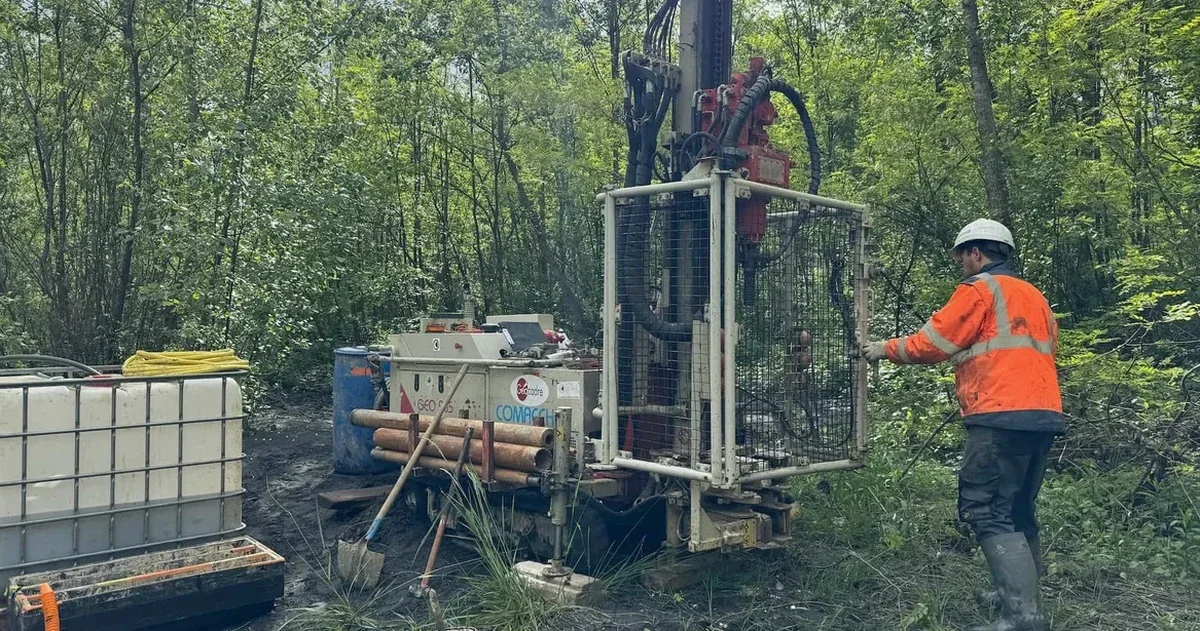
Service characteristics in Montreal
Procedure video
Critical ground factors in Montreal
In the island's eastern sector, our consistent observations show that differential settlement within clay-rich zones can cause tilting of lightly loaded structures within the initial five years if the compressibility profile is not accurately defined. A geotechnical investigation that omits consolidation testing may underestimate total settlement by two to three times, resulting in cracked slabs and uneven floors. Montreal's seismic requirements per NBCC 2015 mandate site class determination, which relies directly on undrained shear strength and SPT results. An incorrect site class assignment may elevate a building to a higher seismic design category, increasing structural costs or, even worse, leaving it inadequately designed. This study resolves such uncertainty by providing defensible parameters for the structural engineer.
Our services
The Montreal lab offers a full range of soil mechanics tests, covering everything from basic index properties to advanced stress-path triaxial procedures, all tailored to the distinct depositional settings encountered throughout the island.
Strength and Consolidation Testing
For defining Mohr-Coulomb parameters, we perform triaxial tests (UU, CU, CD) and direct shear tests, along with incremental oedometer tests to analyze settlement in Champlain Sea clay.
Index and Classification Testing
To classify soils according to the USCS, we measure Atterberg limits, conduct hydrometer analysis, and determine moisture content—crucial for identifying sensitive clays in the Montreal area.
Bearing Capacity and Settlement Reports
Our geotechnical reports utilize limit equilibrium and elastic settlement methods to propose allowable bearing pressures and foundation types in accordance with NBCC.
Top questions
What does a soil mechanics study include for a residential project in Montreal?
For a standard residential project, the work involves drilling to obtain samples, laboratory classification (grain size and Atterberg limits), moisture content determination, and unconfined compression or pocket penetrometer testing on cohesive layers. Subsequently, we assess bearing capacity and issue a foundation recommendation letter certified by an engineer registered in Quebec.
How much does a soil mechanics study cost in Montreal?
The typical cost for a standard single-family home lot falls between CA$4,820 and CA$7,610, varying with the number of boreholes, sampling depth, and required laboratory tests. For larger commercial undertakings, pricing is determined by the specific testing program.
How long does it take to get the final geotechnical report?
Fieldwork and sample collection are typically finished in a single day. Laboratory tests for consolidation and triaxial procedures may require two to three weeks because of the staged loading and pore pressure dissipation needed in Montreal's fine-grained soils. The final report is delivered within one week after the tests are completed.
Do you test for pyrite or other aggressive chemicals in the soil?
Yes, we conduct chemical analyses for sulfate content, pH, and chloride levels in compliance with CSA A23.1 standards. This is especially important in Montreal regions where backfill contains pyritic shale, as sulfate attack on concrete poses a long-term durability issue.