After two decades of inspecting pavement failures across the island of Montreal, one pattern repeats itself: the subgrade was never properly characterized before the asphalt went down. The city sits on a complex glacial legacy—Champlain Sea clays in the east end, stony tills along the Mont-Royal slope, and silty deposits in the St-Laurent lowlands. When a flexible pavement structure is designed without reconciling these contrasts, the result shows up within three freeze-thaw cycles. Our approach ties the CBR road test directly to the grain-size distribution of the native soil, because a single assumed bearing value borrowed from a different borough simply does not hold. For projects near the Lachine Canal or in the Villeray district, we often combine the CBR profile with a grain size analysis to verify the fines content, which governs frost susceptibility under the Ministère des Transports du Québec (MTQ) standards. This is not theoretical work—it is the difference between a parking lot that lasts twelve years and one that heaves after the first January.
A flexible pavement designed without frost-depth data for Montreal is not a pavement—it is a two-year experiment in subgrade failure.
Service characteristics in Montreal
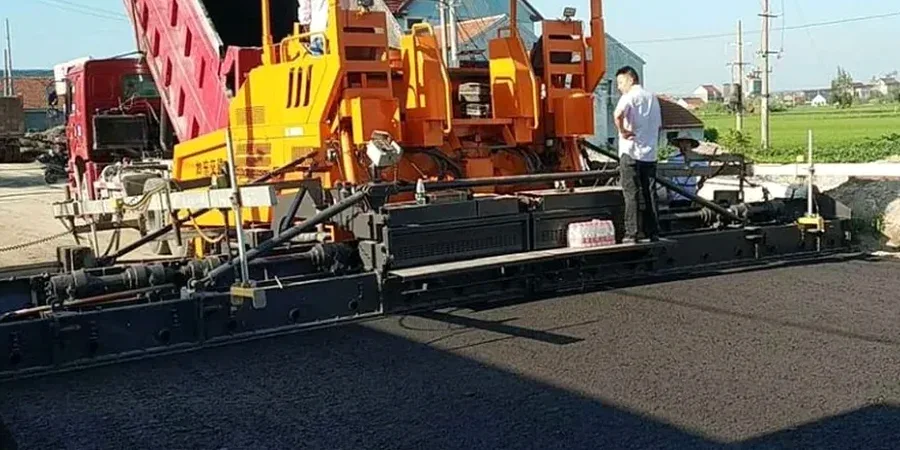
Critical ground factors in Montreal
The contrast between the Plateau-Mont-Royal and the eastern districts around Anjou illustrates why flexible pavement design in Montreal cannot be standardized. The Plateau sits on a shallow bedrock shelf with thin, well-drained till—pavement here rarely sees frost heave beyond 15 mm. Anjou, on the other hand, is underlain by 6 to 12 meters of Champlain Sea silt and clay, with a groundwater table that rises to within a meter of the surface in spring. Without a properly engineered granular sub-base and drainage layer, the pavement structure in Anjou acts as a saturated sponge during freeze-thaw cycles, losing up to 60% of its support capacity by mid-March. The risk is not theoretical: longitudinal cracking and alligator patterns appear in less than five years. We mitigate this by specifying a non-frost-susceptible sub-base—less than 5% passing the 0.075 mm sieve—and by verifying the in-situ density with the sand cone density test at 150 m intervals along the alignment.
Our services
Our flexible pavement projects in Montreal are supported by three core services that span the entire design process, starting with subgrade assessment and concluding with verification of the final structural number.
Subgrade CBR and Soil Survey
We perform field CBR tests with a dynamic cone penetrometer at the formation level and lab CBR tests on remolded samples at optimum moisture content. The process also covers grain-size distribution and Atterberg limits to classify frost susceptibility according to MTQ standards.
Pavement Structural Number Design
Layer thicknesses are calculated using the AASHTO 1993 empirical approach, which we fine-tune for Montreal's freeze index and traffic volumes. Our deliverables include specifications for granular base, sub-base, and asphalt layers, along with structural number (SN) verification.
Compaction Control and Quality Assurance
Each lift of granular material undergoes sand cone density testing and nuclear gauge verification. Instead of relying on generic tables, we develop Proctor reference curves from borrow sources specific to the site, confirming that the required 98% modified Proctor density is attainable.
Top questions
What frost depth should a flexible pavement in Montreal be designed for?
Per MTQ regulations, frost protection depth must be at least 1.2 m for subgrades that are not frost-susceptible, and 1.5 m where silts or fine sands exist. Montreal, with a freeze index between 1,200 and 1,400 °C-days, falls into the severe frost zone. Therefore, unless a rigid insulation layer is added, the total thickness of asphalt and granular layers must be equal to or greater than these depths.
How much does a flexible pavement design for a commercial parking lot in Montreal cost?
Pricing for a full flexible pavement design package—which covers subgrade CBR survey, Proctor compaction testing, grain-size analysis, and structural number calculation—varies from CA$2.300 to CA$7.600 based on test location count and traffic category. Parking lots under 500 m² are priced at the lower end, while arterial road segments requiring multiple boreholes and resilient modulus testing approach the higher end.
Why do flexible pavements in Montreal fail so quickly compared to other cities?
The main cause is the mix of frost-susceptible Champlain Sea soils and inadequate drainage. If the subgrade has over 10% fines, ice lenses develop during winter freezing, causing uneven pavement heave. During the spring thaw, the top layer becomes a saturated slurry while the deeper soil stays frozen, resulting in a perched water table right under the asphalt. In the absence of a well-graded sub-base and edge drains, the pavement's bearing capacity quickly declines, leading to fatigue cracking within only a few years.