The Slopes & Walls category addresses specialized geotechnical engineering for designing, analyzing, and stabilizing earth retention systems and slopes—both natural and man-made—in Montreal's diverse urban and hillside landscapes. This field is vital for public safety, infrastructure resilience, and property protection across the island and adjacent areas, where variable topography meets dense development. From retaining walls on residential driveways in Westmount to major slope stabilization along highways through the Monteregian Hills, these services ensure soil and rock masses remain stable under static and seismic loading. The foundation of every successful project here is the combination of advanced analysis with local geological insight.
Montreal's geology poses unique challenges that shape slope and wall design. Much of the island sits atop sensitive Champlain Sea clay deposits prone to retrogressive landslides, along with glacial till and bedrock from the Monteregian intrusive suite. The St. Lawrence lowlands feature deep clay sequences with high plasticity and low shear strength, while escarpments like Mount Royal and the Hochelaga Archipelago present fractured sedimentary rocks and steep natural grades. Seasonal freeze-thaw cycles, heavy spring runoff, and occasional seismic events from the Western Quebec Seismic Zone complicate long-term stability, making site-specific geotechnical investigation essential before any excavation, anchoring, or wall construction.
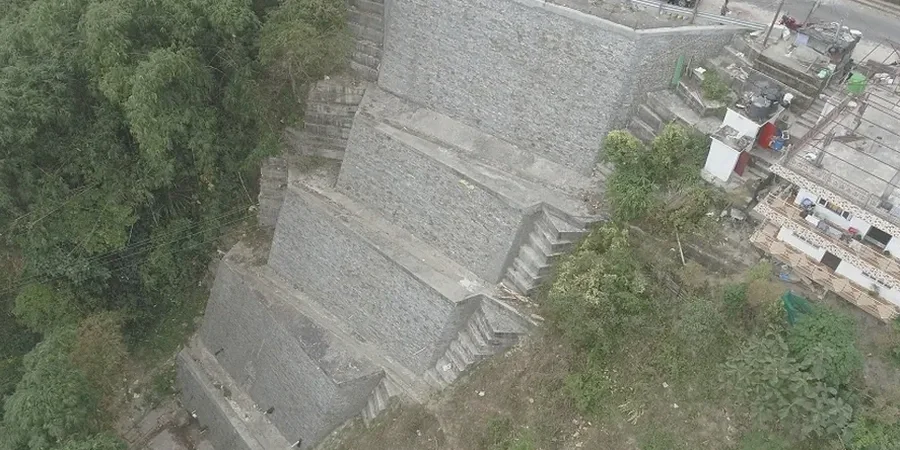
Quebec's regulatory framework for geotechnical works is primarily based on the provincial building code, the Code de construction du Québec, Chapitre Bâtiment, which incorporates the National Building Code of Canada with provincial amendments. Key guidance comes from the CSA A23.3 standard for concrete design and the Canadian Foundation Engineering Manual, while the Loi sur la qualité de l'environnement and Montreal municipal bylaws govern erosion control and hillside protection. Professionals must follow Ordre des ingénieurs du Québec (OIQ) standards, ensuring all retaining structures and slope interventions meet rigorous safety factors against bearing capacity failure, overturning, and global instability. Permitting typically requires stamped engineering reports demonstrating code compliance and consideration of surcharge loads from nearby buildings or traffic.
Projects requiring these specialized services are diverse and widespread throughout Greater Montreal. Deep excavations for mid-rise condominiums in Le Plateau-Mont-Royal necessitate robust temporary shoring and permanent retaining wall design, while infrastructure upgrades along the Turcot Interchange or REM light-rail corridors demand comprehensive slope stability analysis to prevent failures during construction. Hillside residential developments in Outremont or along the Rivière des Prairies often require permanent tieback systems, making active/passive anchor design essential for long-term safety. Transportation projects, waterfront parks, and commercial basement expansions all fall within the scope of this category, each demanding tailored solutions based on soil stratigraphy, groundwater conditions, and performance expectations over a minimum 50-year design life.
Questions and answers
What are the main factors that cause slope instability in Montreal?
The primary drivers of slope instability in Montreal are sensitive Champlain Sea clays, which can lose strength significantly when disturbed, and seasonal freeze-thaw cycles that expand and contract soil fissures. Heavy snowmelt and spring rainfall increase pore-water pressures, reducing effective stress in slopes. Human activities like excavation, deforestation, and improper drainage also contribute to failures, and occasional seismic events from the Western Quebec Seismic Zone can act as the final destabilizing factor.
When is a retaining wall required instead of a simple slope treatment?
A retaining wall is necessary when a slope cannot be cut to a stable angle due to space limitations, property boundaries, or the need for vertical grade separation. If the slope height exceeds what vegetation and surface drainage can stabilize, or if surcharge loads from adjacent buildings or roads are present, a structural wall provides the required lateral support. Walls are also required when permanent, maintenance-free stability is essential for public safety.
What regulations govern retaining wall design in Quebec?
Retaining wall design in Quebec is governed by the Code de construction du Québec, which references the National Building Code and CSA A23.3 for concrete structures. Geotechnical investigations must follow the Canadian Foundation Engineering Manual, while the Ordre des ingénieurs du Québec requires stamped calculations showing adequate factors of safety against sliding, overturning, and bearing failure. Montreal municipal bylaws may also impose height limits, aesthetic requirements, and mandatory drainage provisions.
How do engineers determine the appropriate anchor type for a stabilization project?
Engineers choose between active and passive anchors based on the required load transfer mechanism and soil conditions. Active anchors, such as prestressed tiebacks, are tensioned immediately to apply a known force, making them ideal for retaining walls needing immediate support in dense urban excavations. Passive anchors, like soil nails, mobilize resistance through ground deformation over time and are better suited for stabilizing natural slopes or cuts in stiff clays and glacial till, where gradual load development is acceptable.